

Watching workplaces scramble to design spaces where humans and digital helpers thrive together? It’s giving me serious déjà vu. Like that time we rearranged the playroom after toddler fort-building chaos took over the couch. Except now, the “helpers” happen to be digital buddies instead of toy bricks. Funny how professional revolutions echo in our family rooms, isn’t it? Sound familiar?
Creating Zones Where Kids (and Tech) Shine
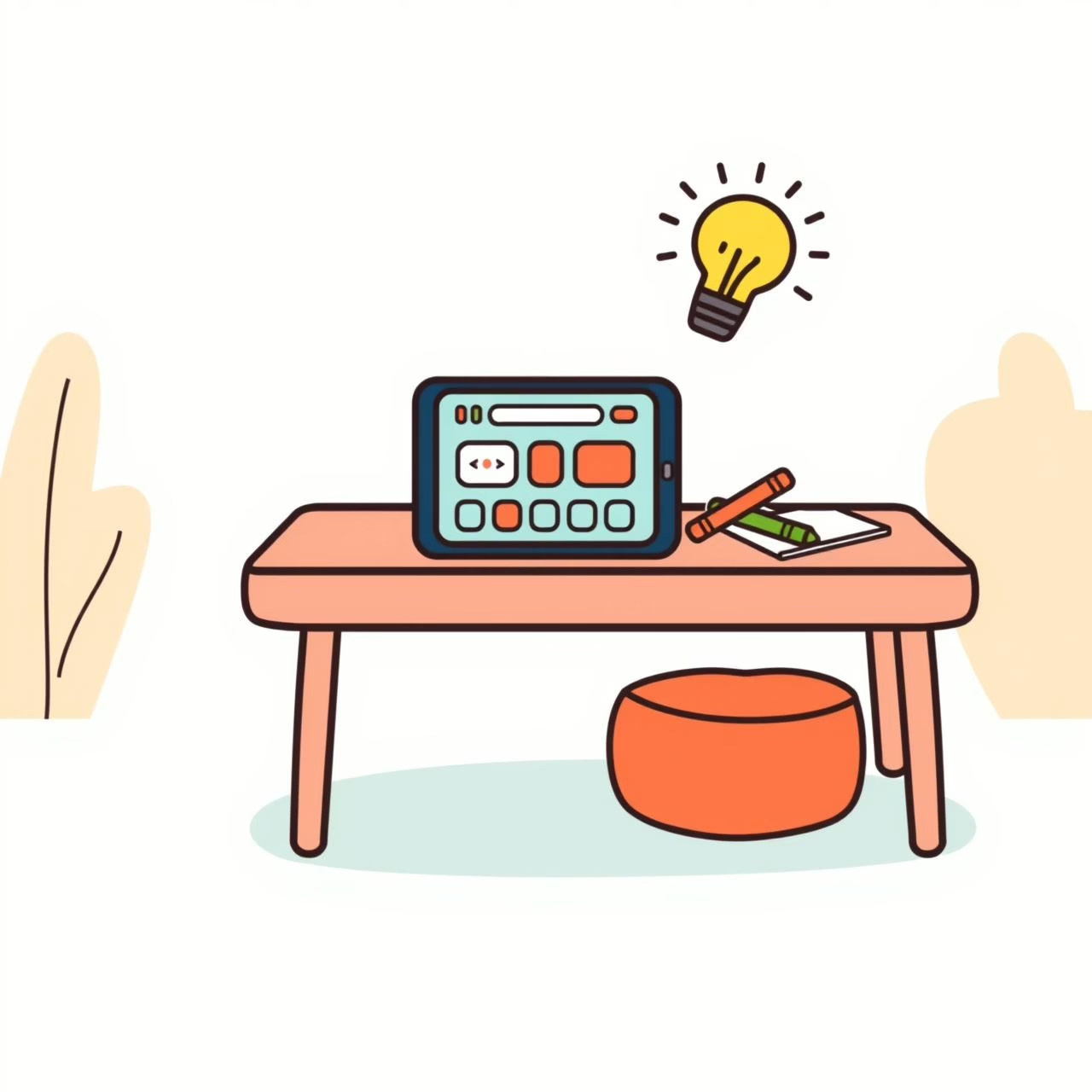
Offices are carving out special labs where teams experiment with digital collaborators—prompt training hubs, secure AI studios, spaces buzzing with trial-and-error energy. Funny how that mirrors our parenting wins. Remember when we set up that dedicated craft corner? Suddenly, glitter stayed contained and creativity flowed. What if we borrowed this wisdom? Designate a ‘creation zone’ where tech becomes a playful partner—maybe the dining table transforms into a story-writing hub with digital helpers suggesting magical creatures while crayons capture them on paper. But here’s the golden nugget from recent studies: humans paired with AI produce stronger creative output (like drafting stories or designing projects), yet struggle more with pure decision-making tasks. Translation? Let the tablet help brainstorm playground adventures, but keep choosing which adventure yours is for the kid. Balance isn’t about banishing screens—it’s about channeling their sparkle where it amplifies imagination, not replaces it.
That cozy corner you carved for fort-building? It’s the same principle. When workplaces build ‘AI-free’ wellness rooms, they acknowledge that constant digital connection drains us. Our homes need that rhythm too. On days when the sky’s wrapped in soft gray clouds, that’s your sign: grab the board games. Let’s normalize ‘cloud-watching hours’—where the only prompts are ‘what shape is that?’ and ‘shall we race to the slide?’
Teaching Kids to Train Their Digital Playmates
Big firms are training junior bankers to customize AI assistants—teaching them when to draft reports versus hand over complex client talks. Sounds familiar? It’s like teaching a kid to ask Siri about cloud formations versus solving friendship squabbles. The magic isn’t in the tool; it’s in the questioning. A Nature study showed that teamwork with tech gives creativity a lift when humans guide AI effectively. So pivot that at home: when your child asks Alexa for a bedtime story, gently coach, ‘How could we make the dragon kinder?’ Suddenly they’re not just consumers—they’re directors shaping digital helpers.
Think of it as ‘prompt practice’ disguised as play. Next time they’re stuck drawing a spaceship, whisper: ‘Ask the tablet what aliens might need inside.’ Watch them light up rewriting the suggestion with crayon-powered solutions. This isn’t about perfect answers—it’s about nurturing that ‘what if?’ spark where tech fuels curiosity without dimming their innate wonder. Because let’s be real: no algorithm can replicate the joy of ‘accidentally’ mixing finger paints into rainbow mud pies.
The Unplanned Pause: Why Overcast Days Save Us
Here’s what the workplace revamp headlines miss: sometimes the best collaboration happens away from screens. Financial giants building AI-free zones aren’t just being trendy—they’re reacting to hard data showing humans need mental whitespace to innovate. Translation for our families? Those overcast days when the sun’s playing hide-and-seek? They’re genius opportunities. Skip the indoor tablet marathon. Wrap up for a walk where the only ‘connectivity’ is noticing how squirrels stash acorns or counting raindrops on windows.
We’ve all felt that post-screen fog—a dazed kid staring blankly after cartoon binges. Turns out workplaces combat this with ‘no-tech zones’ for deep thinking. Our version? The five-minute ‘silent observation’ challenge during walks: ‘Spot three things that move without wind.’ It resets their focus better than any app. And here’s the kicker: research shows humans working solo surpass AI pairs on nuanced decision tasks. So when your child debates park swings versus slides? Don’t reach for the tablet. Let that tiny human wrestle with the ‘what feels right’ muscle. Real growth lives in those unscripted moments.
Designing Family Life for Resilient Curiosity
The most exciting workplace shifts center on connection—not just with tools, but with each other. Microsoft’s team describes how AI ‘defragments’ work by linking communication channels. We can do this at home by making tech bridge gaps, not widen them. Picture this: your child shares a digital drawing they made together with an AI helper, then you both build it from cardboard. That’s the sweet spot—tools extending hands-on joy, not replacing it.
True workplace innovation labs thrive when experimentation feels safe. Bring that energy home: declare one ‘goofy idea hour’ weekly where wild suggestions (‘Can we make breakfast tacos for dinner?’) get tested without judgment. It teaches resilience—that failed pancake attempts or glitchy robot toys are just plot twists, not disasters.
And when things get overwhelming? Channel workplace wisdom: pause, step into your ‘mental wellness room’ (a porch swing counts!), and ask: ‘What’s one thing we’re grateful tech didn’t do today?’ Probably didn’t hug them after a scraped knee. That’s all you. Because nothing—not even genius AI—beats the messy miracle of being human together.
Source: Human and ‘Digital Employee’ Collaboration Will Transform Workplace Design, Commercial Observer, 2025/09/03 14:04:45